

What Is an Expedition Cruise?

When most people hear the word “cruise,” they picture pool decks, Broadway shows, and port days in well-developed harbors.
An expedition cruise is something entirely different.
It is about access, immersion, and wildlife. It is about waking up somewhere remote and stepping into a bouncing Zodiac from a platform and then touching land in the surf, rather than strolling down a gangway or concrete pier. It is about learning from naturalists and scientists instead of lining up for a theater show. It is about being present in places that feel wild and untouched. Luxury may be a feature of the experience, but it also, may no.
Over the winter, I’ve experienced two extraordinary expedition sailings in very different parts of the world: the Galápagos Islands aboard National Geographic-Lindblad Expeditions and Antarctica aboard Silversea. The experiences were similar in purpose, but offered very different onboard styles.
Let’s talk about what makes an expedition cruise so unique.
What Makes an Expedition Cruise Different?

1. Smaller Ships, Remote Destinations: Expedition ships are purpose-built for places larger ships cannot go. You won’t find waterslides, you might not even find a pool, jacuzzi or staterooms with balconies, though you may find all of those and luxury oriented options. You will find reinforced hulls for icy waters, Zodiacs, and highly trained expedition teams.
In the Galápagos, ships are limited to 100 guests, in Antarctica, only 100 people at a time are permitted on land while ships with 500 or more are not allowed to make landings.
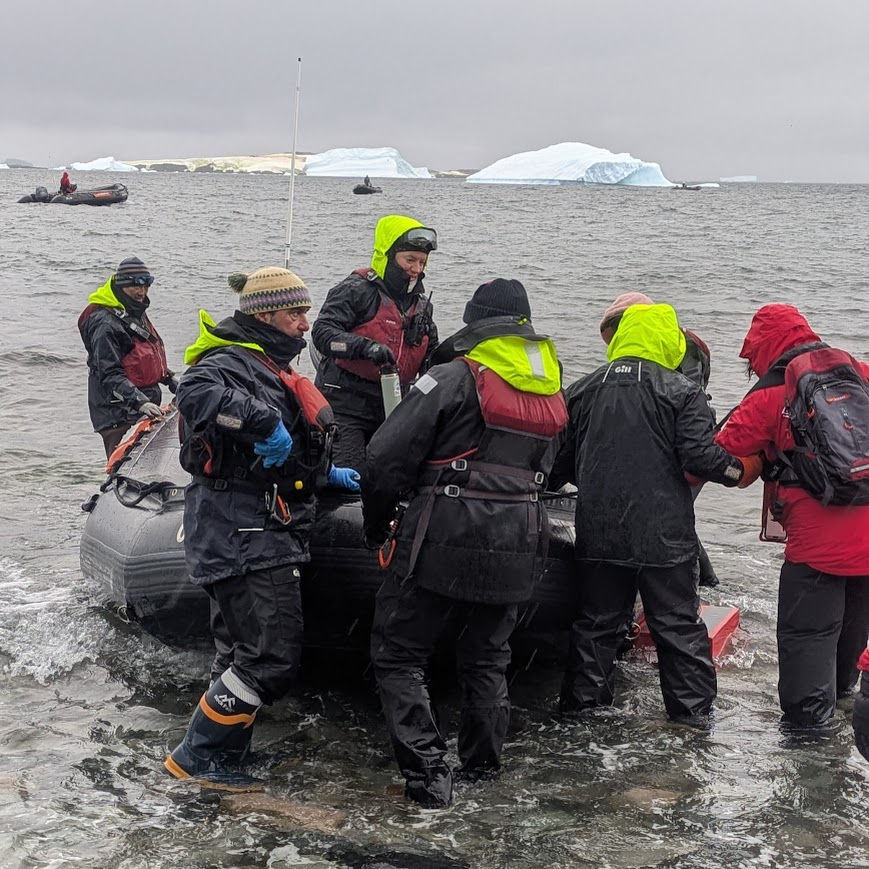
2. Daily Landings and Active Exploration: Instead of docking at a pier, you will have wet landings onto a remote beaches into sometimes lapping, sometimes knock you off your feet waves. Occasionally, you may step directly onto volcanic rock or in Galápagos, onto a floating pier. Days are structured around scenic sailing, hikes, wildlife observation, snorkeling, kayaking, or Zodiac cruising. Those with mobility concerns will need to honestly assess their fitness for some sailings as well, or may need to obtain written permission from their medical provider, to sail.
 |  |
3. Expert-Led Experiences and Discussions: Your expedition team is likely to be comprised of naturalists, marine biologists, cetologists, geologists, ornithologists, zoologists, volcanologists, photographers, and historians. They guide every outing, lead the various subject matter lectures, and are a wealth of information about the destination and what you are seeing every day, plus how to get the most from your experiences in these wild regions. Evenings typically include recaps of the day’s discoveries over a cocktail and a preview of what is ahead on the schedule for the following day.
4. Wildlife & Nature First, Always: Some of the destinations visited are heavily restricted, and come with quite a few rules for both your sake, and of the natural environment. Boot wash stations to prevent bird flu spreading, no bending or touching animals (I would think that goes without saying but apparently...), no single use plastics and reduction of micro-plastics, animals have the right of way at all times, leave the shells on the beach unless you want to explore remote police and prison facilities, reckless selfie seekers need not apply.
These are not just suggestions, and it is made clear from the start that the natural world is the star and priority here, guests are expected to act like it.
 |  |
5. Flexibility Is a Must: The itinerary adapts to nature. If weather conditions shift, the plan does as well; in true expedition style, flexibility is essential. In our case, we had a washed out, rainy day that altered the schedule a bit, while another ship had to cut their time short to make the Drake Passage crossing before rough 30' seas arrived and closed it completely. On our scheduled departure day, the landing strip at King George Island was closed due to low visibility. We were the lucky recipients of two additional days onboard and two additional landing locations, however, when we did leave, there were ships in the harbor that were not afforded that option and sat, in the harbor for nearly three days, making your selection of a cruise line important as well. Guests who were in Chile, due to take our place, were in turn, stuck in Punta Arenas for two days and got a very short cruise once onboard. Landings can change, shift, or be canceled entirely based on safety, wildlife activity, sea or ice conditions.
That unpredictability is not a flaw; it is part of the authenticity of the experience and you have to be ready to roll with it.
6. Onboard Life Starts Early: Sailing on an expedition cruise means early morning wake-up announcements over the pa. Wakey Wakey!! Breakfast may be served only in a 45 minute window between the ship wide announcement and the first call for "Zodiac Group xx" to depart.
Where Do You Find Expedition Cruises?
 |  |
Expedition cruising is found in the world’s most remote regions:
The Galápagos Islands
Antarctica
The Arctic
Greenland
Patagonia and Chile's Fjords
The Kimberley Coast of Australia
Remote parts of Indonesia and Papua New Guinea
Alaska and Canada
Norway and Iceland
South Pacific Islands and Atolls

These are not typical cruise routes. They are places defined by geology, wildlife, and isolation. The routes are designed for those seeking to learn about the destinations first, the ships themselves can range from true expeditionary settings that are more practical and spartan, or they may offer luxury for discerning guests, working with an experienced agent will help you decide.
 |  |
Who Is an Expedition Cruise For?
Travelers who value experience over entertainment.
Those eager to learn.
Those comfortable trading casinos for kayaks.
Those who understand that nature, not a schedule published on a piece of paper, or the clock, will set the schedule.
Many of the expedition cruises are offered by luxury, or premium, cruise lines. However, it is worth noting, even those not offered by traditional luxury oriented cruise lines, will come at a premium. In many cases, operational windows are short, making advance planning, more than a year out in some cases, essential.
Furthermore, another "must know", there are many cruise lines offering "Antarctica" sailings, however there are strict limits on landings in some places and ships over around 100, 200 or maybe 500 guests, are not permitted to offer landings. Meaning you are just scenic cruising on a "cruise by". This may work for you, but it an agent that can help you understand the options is also crucial.
Working with an agent that knows this and can help match you with the right experience, onboard experience, and discuss the timing of your journey to match what you would like to see, is important for a wonderful experience in these hard to reach destinations.
Are you ready to plan a trip? Schedule a call to get started with the following link, which is typically updated a week in advance: CLICK HERE


soi cầu xsmb là thứ mình hay lướt qua mỗi ngày trước giờ quay số miền Bắc để nắm tình hình cho nhanh. Thường mình không xem mỗi một mục, mà hay ghép thêm phần dự đoán xsmb với thống kê lô gan và lô xiên để nhìn xu hướng bộ số rõ ràng hơn, tránh chọn theo cảm giác. Trong nhóm bạn bè cũng hay trao đổi về mấy công cụ kiểu quay thử XSMB, Rồng Bạch Kim với dữ liệu lịch sử, vì dựa trên tần suất thực tế nên đôi lúc gợi ý được vài hướng hay. Mình thấy dự đoán xổ số miền Bắc không chỉ trông chờ may mắn, mà còn phải cân nhắc cầu…
Mình chơi xổ số kiểu cho vui là chính, xem kết quả để giải trí chứ không đặt nặng chuyện đổi đời. Trước đây nghe bạn bè bàn về mấy “cầu” với cách soi này kia, mình cũng mù mờ lắm, nhưng theo dõi lâu thì thỉnh thoảng thấy có vài chỗ trùng hợp khá hay. Mỗi lần đọc một bài dự đoán, mình thường ghi lại vài ý ngắn gọn rồi chờ kết quả ra để tự kiểm tra, xem có phải mình tự tưởng tượng ra không. Có lúc trúng lặt vặt thì vui, nhưng cũng nhiều bữa lệch hết nên mình luôn nhắc bản thân đừng tin quá. Mình thỉnh thoảng xem thêm ở https://soicauxsmb.io/soi-cau-bach-thu-xsmb.html để có…